Fylde Coast history
Old maps. Bright lights. Big seaside energy.
A punchier walk through the moments that made the Fylde Coast: ancient parish roots, estate power, planned towns, railway weekends, electric nights, piers, ballrooms, towers and the resort machine.
Not one history. A chain of different coastal stories.
Blackpool is the showman. Fleetwood is the planned port. Lytham is the estate and priory coast. St Annes is the wide-sanded planned resort. Poulton is the old market root. Cleveleys is the everyday promenade town.
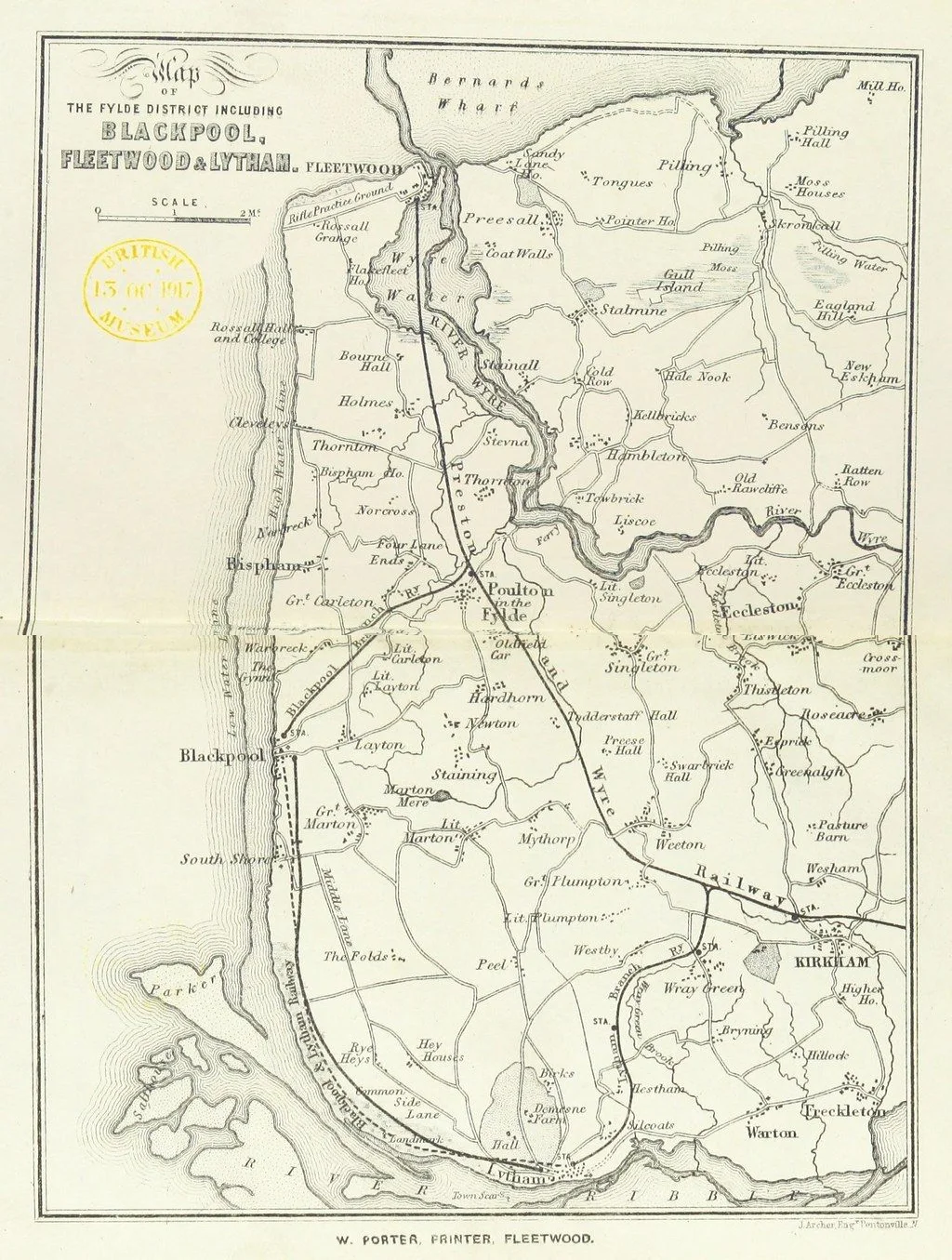
Time machine
Slide through the moments.
Drag the year control and watch the story jump from medieval roots to planned towns, electric nights and the modern skyline.
Poulton-le-FyldeMarket roots
Poulton appears in Domesday Book
Poulton was already an established place when the Domesday survey was compiled. Long before piers, promenades and seaside holidays, this was market-town and parish country.
Source note: Open DomesdayDate deck
More brilliant little sparks from the coast.
Rewritten bite-size moments visitors can skim, filter and dip into, inspired by the big Blackpool Timeline approach but shaped for a calmer browse.
The Big One changes the skyline.
The rollercoaster gave Blackpool a late twentieth-century landmark: a visible line of steel that shouted thrill ride from across the promenade.
Blackpool Pleasure BeachThe Matthews Final enters football folklore.
Blackpool's 4-3 FA Cup comeback against Bolton made Sir Stanley Matthews, Stan Mortensen and the club part of one of Wembley history's best-known stories.
National Football MuseumThe Freckleton Air Disaster.
A USAAF B-24 crashed into the village in August 1944, killing 61 people including 38 children and leaving one of the Fylde Coast's most solemn wartime memories.
Blackpool Timeline / local memorial accountsAmy Johnson's final departure.
The pioneering aviator left Blackpool Airport on 5 January 1941 during wartime service; her final flight links the coast to a national aviation mystery.
Blackpool Timeline / CMR Online leadAn Art Deco Opera House opens.
The present Opera House arrived on the eve of the Second World War, adding a huge modern theatre to one of Blackpool's defining entertainment complexes.
Winter Gardens BlackpoolIce show culture arrives.
Pleasure Beach's ice show tradition began in the 1930s, giving the resort another all-weather performance thread away from the beach itself.
Blackpool Pleasure Beach historyA municipal aerodrome opens.
Blackpool's aviation story was not tucked away: the Stanley Park aerodrome brought flying into the resort's civic imagination before wartime use reshaped the area.
Blackpool Timeline date leadOlympia adds exhibition scale.
The Olympia hall brought a different kind of visitor draw to the Winter Gardens, mixing shows, exhibitions and themed spectacle inside the complex.
Winter Gardens BlackpoolBlackpool gets its grand civic park.
Designed by Thomas Mawson and opened in 1926, Stanley Park gave the growing town a planned green space for residents as well as visitors.
Historic England / Blackpool CouncilBobby Jones wins The Open.
Royal Lytham and St Annes hosted The Open and saw Bobby Jones claim the Claret Jug, turning the course into part of golf's international memory.
Royal Lytham / The OpenBlackpool Dance Festival begins.
The Empress Ballroom became a world stage for competitive dancing, adding another strand to Blackpool's reputation for spectacle and performance.
Winter Gardens BlackpoolIlluminations become a visitor magnet.
A royal-visit lighting display on the promenade proved so popular that the resort saw how electric nights could pull people beyond the summer season.
Blackpool Illuminations historyCleveleys grows into its own stop.
Tram links and promenade growth helped Cleveleys become more than Blackpool's northern edge: a separate coastal centre with its own everyday seaside life.
Visit Fylde CoastThe Flying Machine lifts off.
Sir Hiram Maxim's Captive Flying Machine brought Edwardian engineering glamour to the Pleasure Beach and still anchors the park's deep ride history.
Pleasure Beach ResortThe Mount Pavilion crowns the dune.
Built on The Mount, the pavilion gave Fleetwood's planned-town geometry a lookout point with sea views and civic confidence.
Blackpool Timeline / Historic England leadSt Annes Old Links is established.
The club grew from local demand for accessible golf after the earlier Lytham and St Annes club moved south to its championship home.
St Annes Old LinksPleasure Beach begins.
William George Bean's amusement venture turned the south beach into a permanent playground, setting up one of the coast's longest-running visitor magnets.
Pleasure Beach Resort / Sheffield ArchivesThe Tower opens to the public.
Opening day put a 518-foot symbol above the promenade and gave Blackpool a landmark that could be recognised before visitors had even reached the beach.
The Blackpool TowerTower Circus opens below the Tower.
The Tower was never just a viewing platform: its circus and indoor rooms made the building a complete entertainment machine from the start.
Blackpool Timeline / Tower Circus historyThe Grand Theatre opens.
Frank Matcham's theatre arrived in the same boom year as the Tower, giving Blackpool a lavish stage that could compete with the resort's biggest venues.
Blackpool Grand TheatreVictoria Pier opens at the south end.
Later renamed South Pier, Victoria Pier gave the southern promenade its own big attraction and helped frame the three-pier seafront people know today.
National Piers SocietyThe Tower gets its foundation moment.
The foundation stone signalled a new scale of ambition: Blackpool was not just entertaining crowds, it was building a skyline for them.
Blackpool Grand Theatre timelineThe first Opera House opens.
Frank Matcham's first Opera House inside the Winter Gardens added serious theatrical scale to Blackpool's indoor entertainment offer.
Winter Gardens BlackpoolBlackpool FC is founded.
The Seasiders' football story begins in the same confident resort decade that produced new theatres, new promenading culture and bigger visitor ambitions.
Blackpool FC / football recordsChampionship golf takes root.
The early Lytham and St Annes golf course began on land that would later feed two major local golf stories: Royal Lytham and St Annes Old Links.
St Annes Old LinksSt Annes Pier opens over the sands.
The pier helped establish St Annes as a planned, genteel resort with a different rhythm from Blackpool's louder entertainment centre.
National Piers SocietyElectric trams begin running.
The tramway made the coast feel connected and modern, linking visitor movement with the same electric confidence that powered the resort's image.
Blackpool Grand Theatre timelineArtificial sunshine arrives.
Early electric lighting turned the promenade into a spectacle and gave Blackpool the bright-night identity that later became the Illuminations.
VisitBlackpool / Grand Theatre timelineWinter Gardens opens indoors.
The Winter Gardens gave Blackpool a weatherproof entertainment world with promenading, skating and performance spaces under one ambitious roof.
Winter Gardens BlackpoolLocal news finds a stronger voice.
The newspaper story that later leads to the Blackpool Gazette roots the resort's boom years in something more everyday: people wanting local events recorded.
Blackpool Timeline date leadCentral Pier joins the seafront.
A second pier pushed Blackpool further into entertainment-resort territory, mixing sea views, landing-stage practicality and growing visitor crowds.
Blackpool Pier CompanyNorth Pier opens the promenade era.
Blackpool's first pier gave visitors a refined walk over the sea, designed by Eugenius Birch and still a signature piece of Victorian seaside engineering.
North Pier / National Piers SocietyRail travel changes the resort equation.
The Preston and Wyre railway link made Blackpool easier to reach, helping turn a remote bathing place into a growing mass visitor town.
Blackpool Council conservation appraisalFleetwood Market starts trading.
Market rights were ancient, but the town's working market life began in earnest as Hesketh-Fleetwood's port town was taking shape.
Fleetwood Market heritageThree lights guide ships to Fleetwood.
The Pharos, Lower Lighthouse and offshore Wyre Light created a rare three-lighthouse system for a port town built around safe navigation.
Historic England / Wyre CouncilFleetwood is drawn as a new town.
Sir Peter Hesketh-Fleetwood and Decimus Burton shaped the northern coast into a planned port town, with streets and landmarks arranged around maritime ambition.
Historic England / Blackpool TimelineMarsh Mill catches the Fylde wind.
Ralph Slater built Marsh Mill for a grain-growing landscape where wind power mattered. It remains one of the coast's strongest links to rural Fylde industry.
Visit Cleveleys / Marsh Mill historyLytham Hall reaches Georgian grandeur.
The present hall gave the coast a major country-house landmark, grounding Lytham's identity in estate power as much as seaside life.
Historic EnglandThe Clifton family takes Lytham.
Cuthbert Clifton's purchase of the manor helped set up the estate landscape and hall story that still gives Lytham its distinctive character.
Lytham HallMonks shape early Lytham.
Lytham's priory story ties the coast to Durham's Benedictine world, adding a quiet medieval layer beneath the later estate and resort years.
British History OnlinePoulton appears in Domesday Book.
Poulton was already recorded when the Domesday survey was compiled, giving the coast a market-town thread far older than the resort story.
Open DomesdayA prehistoric clue in the peat.
The Carleton Elk story pulls the coast far beyond Victorian resort history, pointing to a landscape people and animals crossed long before the modern towns existed.
Blackpool Timeline date leadArea chapters
Five different ways the coast became itself.
Resort engine
Blackpool
From small shore to entertainment machine.
Blackpool's history is a story of scale: railway visitors, piers, ballrooms, Tower, lights and a town that learned how to keep people entertained in every kind of weather.
- Railway access turbocharged the visitor trade.
- Winter Gardens turned bad-weather days into show days.
- The Tower and Illuminations made the skyline and nights unforgettable.
Planned port
Fleetwood
A town sketched with ambition.
Fleetwood was not simply a place that grew by accident. It was planned as a port and resort, with Decimus Burton's touch and The Mount watching over the town.
- Sir Peter Hesketh-Fleetwood pushed the town into being.
- The port, ferry and railway shaped its working identity.
- The town still carries the bones of a designed nineteenth-century place.
Estate coast
Lytham
Older, greener and full of estate echoes.
Lytham's story reaches back through priory land, the Clifton family and the Georgian hall, leaving a coastal town with a different kind of grandeur.
- The medieval priory gives Lytham a deeper timeline.
- Lytham Hall anchors the estate landscape.
- The green, windmill and estuary views keep the old coastal character visible.
Planned resort
St Annes
Wide sands, pier days and calm resort manners.
St Annes developed as a planned seaside town, with the pier, gardens and beach giving it a more open, slower-paced identity than Blackpool.
- St Annes Pier opened in 1885.
- The planned streets and gardens shaped a gentler resort feel.
- The sands are still the big first impression.
Everyday roots
Cleveleys and Poulton
Market town, tram coast and stories between.
Poulton carries the ancient parish and market-town thread, while Cleveleys tells the story of coastal growth, trams, sea defences and a promenade people actually use.
- Poulton appears in Domesday Book.
- Cleveleys grew with transport links and the northern promenade.
- Together they show the coast is not one single resort story.
Archive moments
Closer to the actual scenes.
 1893
1893Blackpool Tower rising before opening day.
A real construction-period image of the Tower, one year before it opened to the public on 14 May 1894.
Actual construction image / Wikimedia Commons, public domain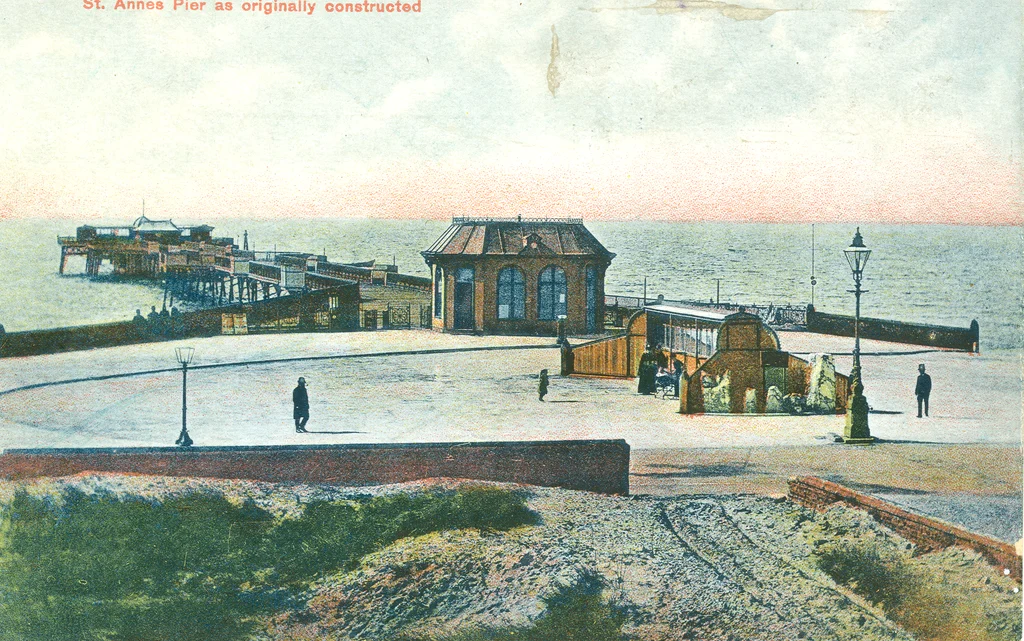 c.1885
St Annes Pier as originally built.
The pier in its original form, matching the 1885 opening period rather than the much-altered structure visitors see today.
Original pier record / Red Rose Collections, Lancashire County Council 1894-1910
Blackpool Tower in its early public years.
Not the opening ceremony itself, but a close early view of the Tower in the period when it had become the coast's instant landmark.
Opening-era landmark / Wikimedia Commons, public domainTransport made the crowds. Weather made the venues. Electricity made the myth.
Railways made weekend travel realistic. Indoor entertainment kept visitors spending when the sky turned grey. Electric light, towers and rides gave the coast the kind of spectacle people remembered after they went home.
Sources and caveats
How we checked it.
This researched guide was last checked on 3 August 2026. The timeline keeps source notes on the page and the links below point to broader, verified source hubs instead of brittle deep links.
Blackpool Timeline
- Used for
- Additional date leads and inspiration for the richer date-deck section.
- Licence / terms
- External editorial timeline; facts used as leads and rewritten for this guide.
- Caveat
- Used as a discovery source, with the bigger claims checked against heritage or official sources where practical.
British Library / Flickr Commons
- Used for
- Historic Fylde map plate from Porter's Guide to Blackpool, Fleetwood, Lytham, etc.
- Licence / terms
- No known copyright restrictions via Flickr Commons.
- Caveat
- The plate is stitched from the top and lower page images so visitors can see the whole local map.
Internet Archive
- Used for
- Public-domain scan of Porter's History of the Fylde of Lancashire for local historical context.
- Licence / terms
- Public-domain book scan hosted by Internet Archive.
- Caveat
- Historic books reflect the language and emphasis of their period.
Lytham Hall
- Used for
- Lytham estate, Clifton family and hall context.
- Licence / terms
- Venue history page; check source page for reuse terms.
- Caveat
- Useful for Lytham's estate story, not a complete account of the whole Fylde Coast.
Wikimedia Commons
- Used for
- Archive imagery for Blackpool Tower under construction in 1893, Blackpool Tower around 1905 and the Blackpool sands illustration from 1895.
- Licence / terms
- Public domain / public-domain marked archive images.
- Caveat
- Archive images are used as atmosphere and historical illustration, not as proof of every timeline date.
Red Rose Collections
- Used for
- St Annes Pier as originally built, c.1885.
- Licence / terms
- Lancashire County Council collection record; source page gives reproduction guidance.
- Caveat
- Used for the original pier image and linked so the collection record remains visible.
Blackpool Gazette archive lead
- Used for
- The 1891 photograph showing the early arc lamps used for Blackpool's artificial sunshine story.
- Licence / terms
- Commercial archive image, not embedded here without reproduction clearance.
- Caveat
- A strong lead for licensing if you want the exact first-electric-light visual on the live page.
Official venue and heritage pages
- Used for
- Extra date-deck checks for Winter Gardens, Blackpool Tower, Stanley Park, Fleetwood lighthouses, Marsh Mill, golf and football moments.
- Licence / terms
- Mixed official and heritage reference pages; each source keeps its own reuse terms.
- Caveat
- Used for fact-checking short rewritten cards, not for embedding their copy or images.